
As the most fundamental load-bearing unit in the current logistics and warehousing industry, the load-bearing capacity, stability and durability of printing pallets largely depend on the raw materials. At present, the raw materials of plastic pallets on the market are mainly divided into two types: polyethylene (HDPE) and polypropylene (PP). However, according to the proportion of raw materials used, it can be further classified into four types: brand new materials, common materials and recycled materials. So, how can we distinguish these types of plastic pallets made of different materials during use?
The material definition of nonstop pallets
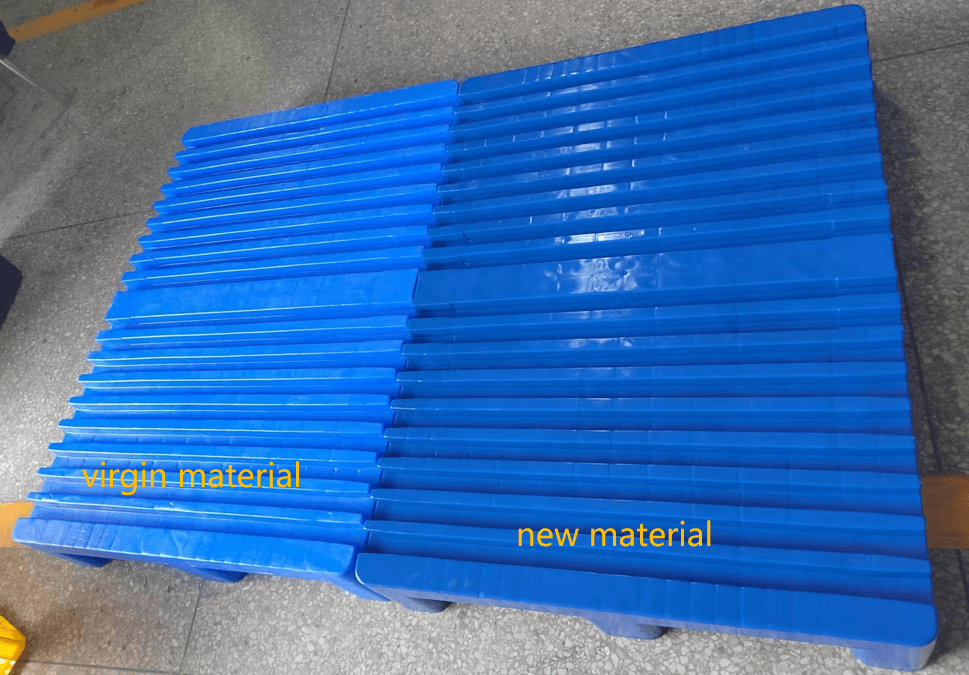
Virgin material: That is, 100%HDPE/PP brand new material. Its advantages are bright color, no odor in the product, good toughness, strong low-temperature resistance, strong load-bearing capacity and long service life. The drawback is its high price.
New material: Mixed with modified materials in a certain proportion (the proportion does not exceed 20%), the cost is relatively lower than that of brand-new materials, and the purchase price is also lower. Apart from the color, such as the transparency of virgin material, there is no difference in other qualities compared to virgin material.
Common material: Mixed with modified materials in a certain proportion (the proportion does not exceed 500%), its cost is relatively lower than that of new materials, and the purchase price is also lower. The product retains the same load-bearing capacity as new or virgin materials, but the color of the tray is relatively dark and the material is rather brittle, so it can only be used under normal temperature conditions.
Recycled material: A large amount of recycled material is added. It is a disposable plastic pallet and can only be used to produce black products. The drawback of this raw material is its poor performance, but it is very cheap and suitable for one-time export.
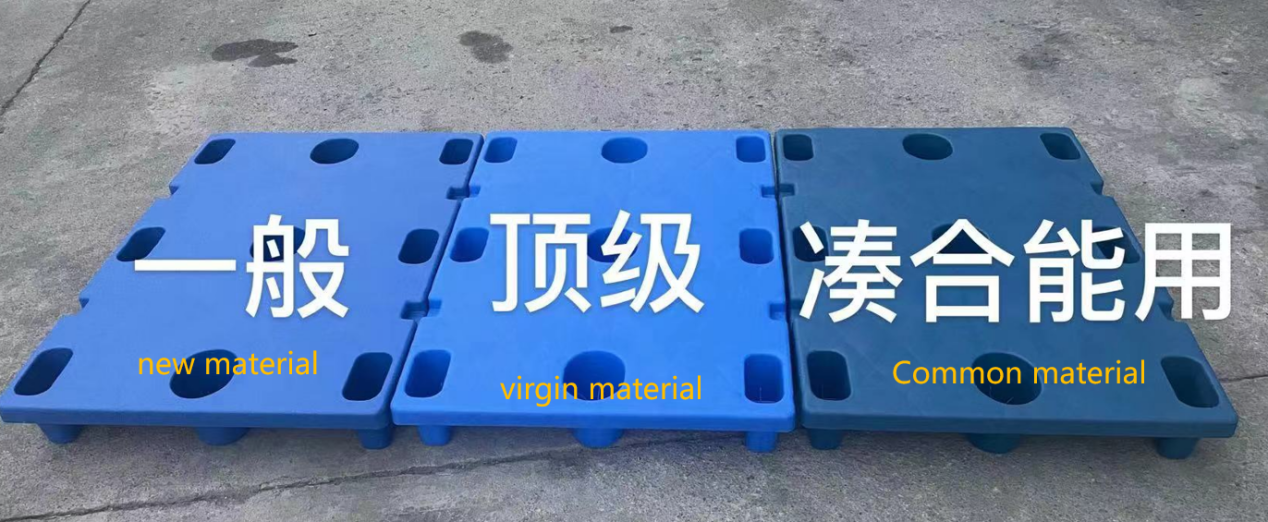
Identification methods for new and recycled nonstop pallets
Nonstop Pallets produced from new materials
The color of virgin material and new material plastic pallets is bright and lustrous, with obvious luster reflection under sunlight. The plastic pallets made of common and recycled materials are dull in color and lack luster.

Virgin materials and new material products have good toughness, are resistant to bending, do not deform and do not crack. However, recycled materials have poor toughness, are relatively brittle and prone to breakage
Bright in color, strong in toughness, high in load-bearing capacity, excellent in cold resistance, and will not rot when exposed to alkaline chemicals
Applicable circumstances:Suitable for long-term repeated use
Nonstop Pallets produced from recycled materials

The color is dark, lacks luster, and the material is relatively brittle
Recycled materials: They are brittle and prone to damage and breakage. Once impacted, they cannot be reused and have a short service life.
Applicable circumstances: our plastic pallets are suitable for static load moisture-proofing in warehouses or for one-time export. If it is not to be moved, it is recommended to purchase recycled materials, which are cost-effective
Existence is reasonable! Each type of plastic pallet made of different materials has its specific use. Under normal temperature conditions, ordinary plastic pallets made of common materials can meet normal usage requirements. If customers have the need for gold cold storage, they can choose plastic pallets made of new materials. However, industries such as food or medicine have strict hygiene requirements, so it is recommended to use plastic pallets made of virgin materials. If it is only for one-time loading and shipment or container export, black recycled plastic pallets can be used.
Post time: Dec-25-2025