
Digital transformation is extending beyond printing pallet machines and production software. More printing pallet and packaging pallet companies are now exploring ways to collect data from every stage of production, including warehouse logistics pallet and paper handling pallet. In this new environment, even the printing pallet and nonstop pallet can become part of a connected manufacturing system.
Traditionally,nonstop pallets were treated simply as tools for moving materials. However, modern nonstop pallet factories can attach barcodes, QR codes, RFID tags, or other identification systems pallet to a printing pallet. This allows companies to track paper batches as they move from storage to printing pallet, finishing, and packaging areas.
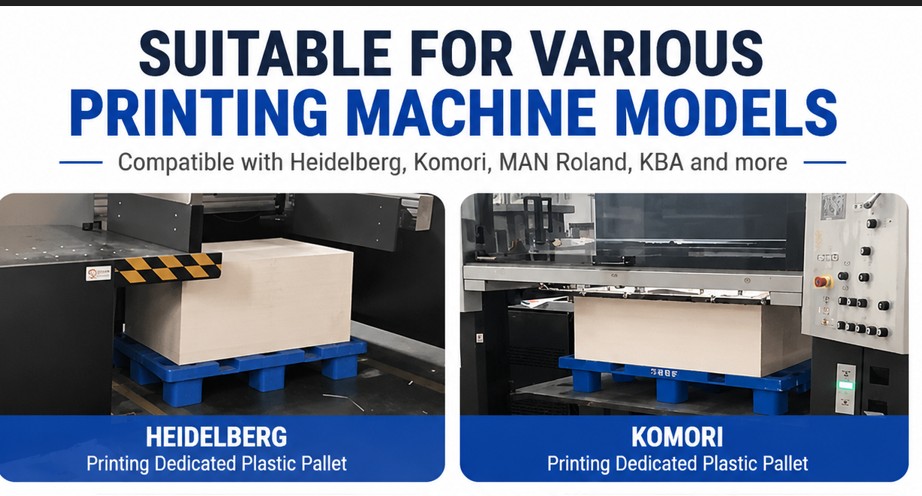
A digitally identified printing pallet can contain information such as paper type, batch number, customer order, production date, or destination. When connected with warehouse management systems, this information can improve traceability and reduce the risk of using the wrong paper for a printing pallet work.
The nonstop pallet can also fit into this digital workflow. Since the nonstop pallet is often used directly at high-speed printing pallet presses, tracking its movement can help printing pallet production teams understand how printing pallet usage, replacement frequency, and paper-flow efficiency.
For large printing factories, real-time visibility can help supervisors identify delays and improve nonstop pallet production planning. If every printing pallet has a digital identity, operators can quickly locate specific paper batches and confirm whether materials are ready for production.
At the same time, combining a nonstop pallet with automated pallet production systems can support more consistent paper feeding pallet and reduce unnecessary interruptions during pallet replacement.
Industry 4.0 is based on connecting equipment, materials, data, and people. Although printing pallet presses remain at the center of production, supporting logistics pallet equipment is also becoming part of this connected environment.
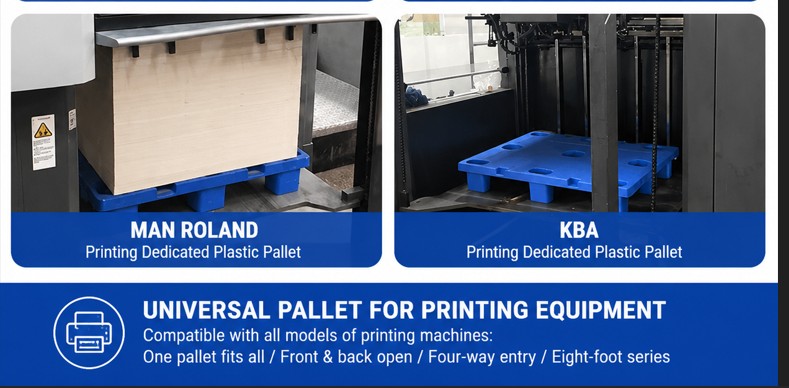
In the future, the printing pallet may be more than a physical platform for paper transportation. Together with the nonstop pallet, it could become a data carrier within the smart printing factory, helping companies improve traceability,Nous cherchons des palettes production planning, inventory control, and overall operational efficiency.
The factors influencing plastic pallets include the amount of materials used in the production of plastic printing pallets; the type of materials; the market price of the materials; and the different types of plastic pallets. The production process for pallets specifically used in the printing industry is relatively complex. The design requirements for surface grooves are stricter than those for ordinary plastic nonstop pallets in the market. Their dimensions and appearance are different from the conventional plastic pallets in the market. This type of pallet has low market usability and a small sales volume, so manufacturers will spread the cost of developing and designing molds across the products. Therefore, the defect rate during production will also be higher, resulting in higher production costs. Consequently, its price is relatively higher.
Post time: Oct-16-2026