
The rapid growth of customized nonstop pallet packaging, seasonal designs, limited-edition products, and short-run printing pallet is changing production patterns across the packaging pallet industry. Printing pallet factories are now required to switch between different jobs more frequently, making flexible material handling more important than ever. In this environment, the printing pallet and nonstop pallet can play an important role in improving work-flow through all the printing process.
Traditional high-volume printing pallet often involved producing the same packaging design for long periods. Today, brands may require multiple package designs, regional versions, promotional editions, or personalized products within the same nonstop pallet production schedule.
This means paper stacks must be prepared with flat pallet, identified, transported, and changed more frequently. A standardized printing pallet can help printing companies organize different paper batches and move them efficiently between storage areas and printing machines.
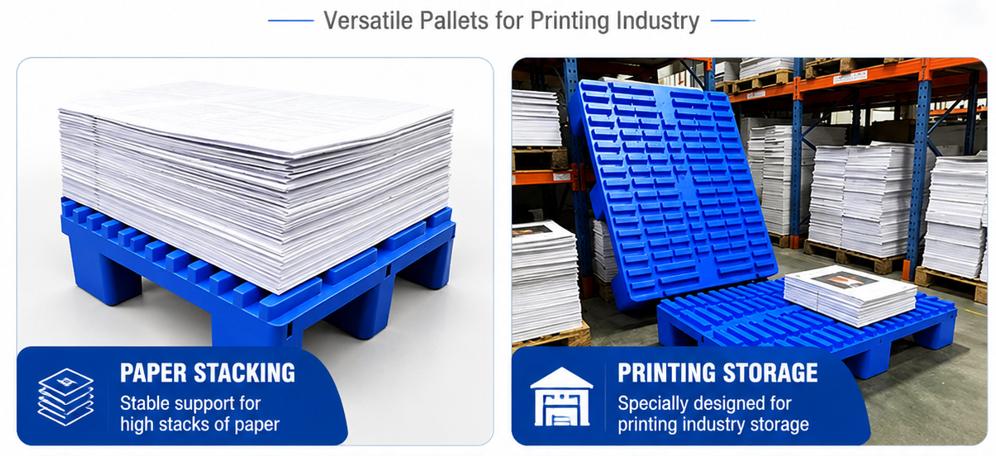
The nonstop pallet becomes particularly useful when production schedules are tight. During paper feeding, the grooved structure of a nonstop pallet allows support bars to hold the paper stack while the automatic pallet is exchanged. This can help printing presses pallet continue operating during automatic pallet changes.
When factories handle many short production runs in one day, several small interruptions can quickly become a major source of lost production time. Using a nonstop pallet can help reduce these interruptions and keep job changes more efficient.
A reusable plastic printing pallet also supports better production organization. Different paper grades, sheet sizes, or customer orders can be prepared on separate pallets before entering the printing area. Labels or tracking systems can also be added to each printing pallet to improve identification.
The growing demand for customized packaging is encouraging printing pallet pcompanies to rethink not only printing pallet technology, but also internal logistics. Fast job changes require smooth coordination between warehousing, paper preparation, printing, finishing, and packaging.
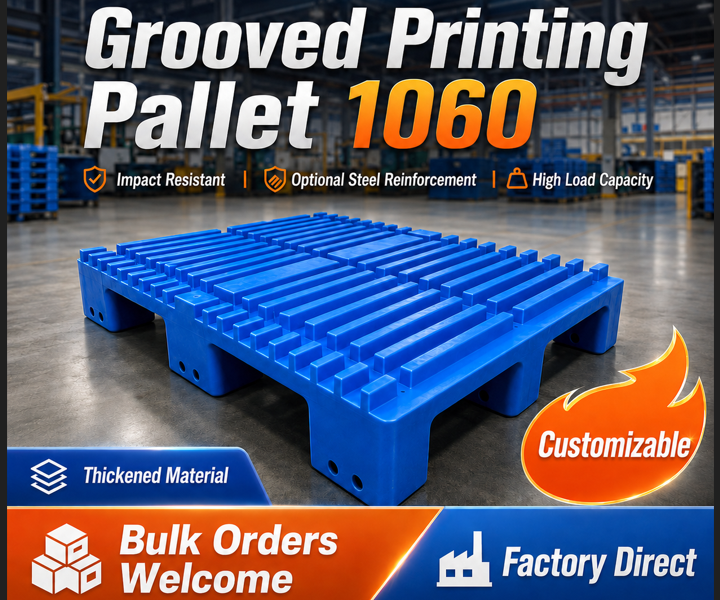
As short-run production becomes more common, flexible logistics pallet solutions will become increasingly valuable. The printing pallet and nonstop pallet can help printing plants respond more quickly to changing orders while maintaining efficient material flow and stable production.
With the increasing environmental pressure, countries like Europe, the United States, and Japan have imposed extremely strict fumigation and inspection requirements on imported wooden packaging (including wooden pallets). These stringent regulations have had a significant impact on the demand for wooden pallets. In response, plastic printing pallets have become the global trend.
Post time: Sep-23-2026