
In the transformative landscape of 2026, the global packaging and printing industry stands at a critical crossroads of technological iteration and supply chain reconfiguration.
As an printing pallet industry bellwether, every strategic move by XF plastic pallet in Greater China draws significant attention.
In modern warehousing, logistics pallet and automated pallet storage systems, Plastic pallets are the core carriers for loading, handling and stacking. The mainstream types of nonstop pallets available on the market – wooden pallets, steel pallets and plastic pallets – each have their own characteristics. However, an increasing number of food, pharmaceutical, new energy and cross-border e-commerce enterprises are firmly shifting to plastic pallets. It’s not because wooden pallets are too expensive, nor is it because steel pallets are not strong enough. Rather, plastic printing pallets redefine the concept of cost-effectiveness with their comprehensive performance.

1. Wooden pallets: At first glance, they seem cheap, but in fact, they become more expensive as they are used. Wooden pallets are a traditional and entry-level option. Their advantages are obvious: low purchase price, quick processing, and convenient material sourcing. They are sufficient for short-term use.
However, its drawbacks are almost fatal: prone to mold, insect infestation, shedding of debris, cracking due to iron nails, likely to damage goods and hurt people. It is afraid of water and humidity, has an extremely short lifespan. Usually, it needs to be replaced frequently within 1 to 3 years. It must be fumigated for export. The process is complex and the cost increases. The dimensions are not uniform, and it cannot be adapted to automated vertical storage systems or AGVs.
2. Steel logistic pallets: They are sufficiently sturdy, but too heavy and too “rigid”. Steel pallets are renowned for their strength and are suitable for extremely heavy load scenarios: with extremely strong load-bearing capacity, stable impact-resistant structure, and not prone to deformation.
However, its shortcomings are also prominent: extremely heavy, increasing transportation fuel consumption and handling burden, prone to rust, especially in humid, cold storage, chemical environments, with high noise, prone to damaging the surface of goods, and high price, as well as high maintenance costs.
III. Plastic Shelves: Comprehensive superiority, becoming the mainstream choice in the industry. If wooden shelves win with “low price”, steel shelves win with “strength”, then plastic shelves win with: comprehensive, balanced, and long-term optimality.
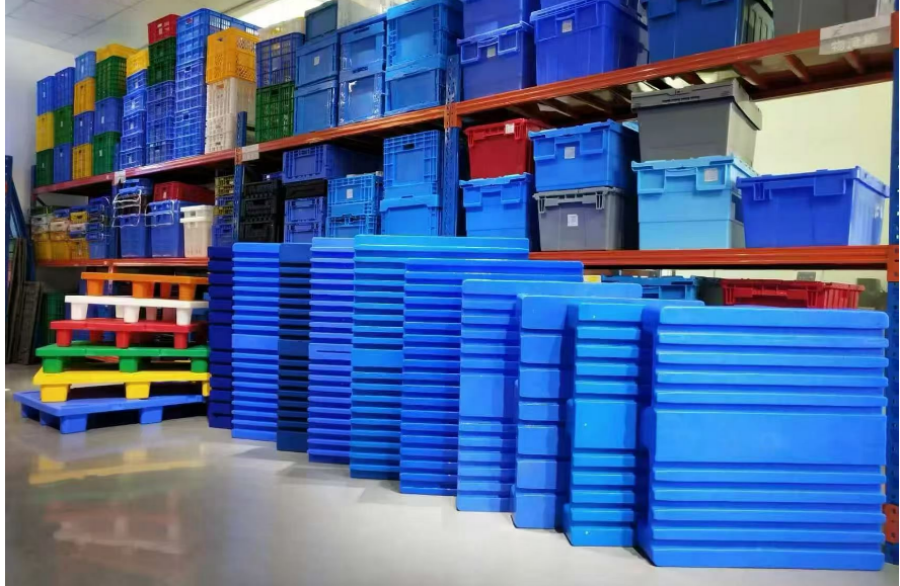
Here are the core advantages that plastic pallets truly cannot be replaced by:
1. Extremely long service life, the more you use, the more cost-effective it becomes.
2. Hygienic and environmentally friendly, ideal for food and pharmaceutical industries.
3. Moisture-proof, anti-corrosive, resistant to acids and alkalis.
4. Export inspection-free, facilitating smoother customs clearance.
5. Lightweight, reducing transportation costs.
6. Precise dimensions, suitable for automated storage systems.
7. Safe and environmentally friendly, recyclable and reusable.
IV. Why are more and more enterprises choosing plastic printing pallets? Food/Pharmaceuticals: Need hygiene, compliance, and easy cleaning → Choose plastic pallets. Cross-border E-commerce: Need exemption from inspection, durability, and uniform standards → Choose printing pallets. Cold Chain/Low Temperature Storage: Need moisture-proof, low-temperature resistance, and no deformation → Choose printing pallets. Automated Racking System: Need precision, stability, and low loss → Choose nonstop pallets. Chemicals/Plastics: Need corrosion resistance, impact resistance, and long lifespan → Choose printing pallets.
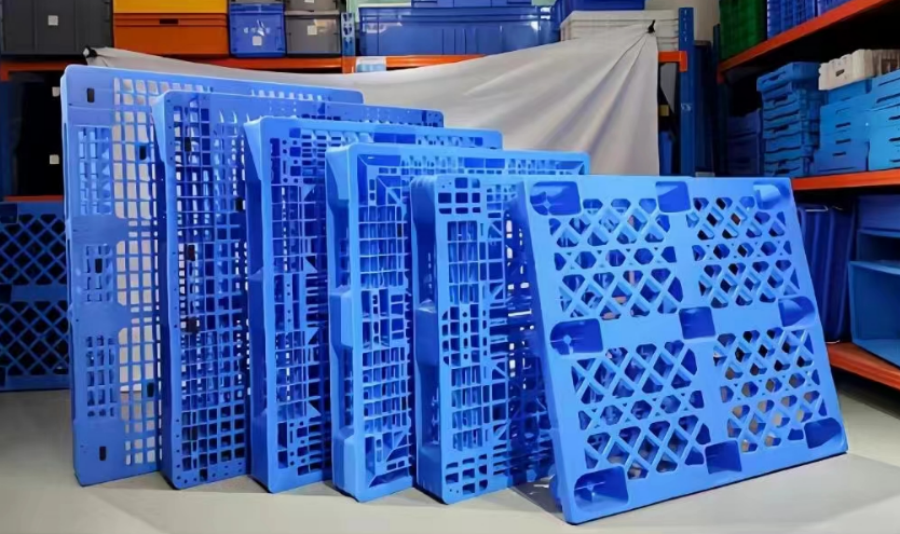
When choosing a pallet, one should not merely focus on the initial cost. Instead, one should consider the overall costs including lifespan, maintenance, labor, logistics, compliance, and safety. Wooden pallets excel in being “cheap at first”; steel pallets excel in “extreme load-bearing capacity”; plastic pallets excel in being the optimal choice throughout the entire cycle. They are more durable, cleaner, more convenient, and better suited for future warehousing. Once you make a choice, you will benefit for a long time.
Post time: May-07-2026